respawn customers know if they can recover
Continuous proof. Find failures. Remediation. Evidence.
Agentless, read-only. Deploy in minutes.
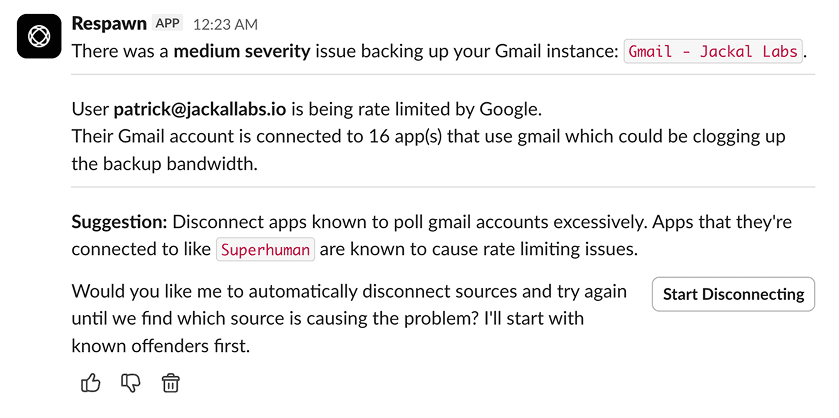
Turn messy errors into clear answers
You don't get: "Error 403. Quota exceeded"
You get:
Root cause
Why
Impact
Fix
That's the difference between an alert and teammate.
Find the recovery failures you don't see
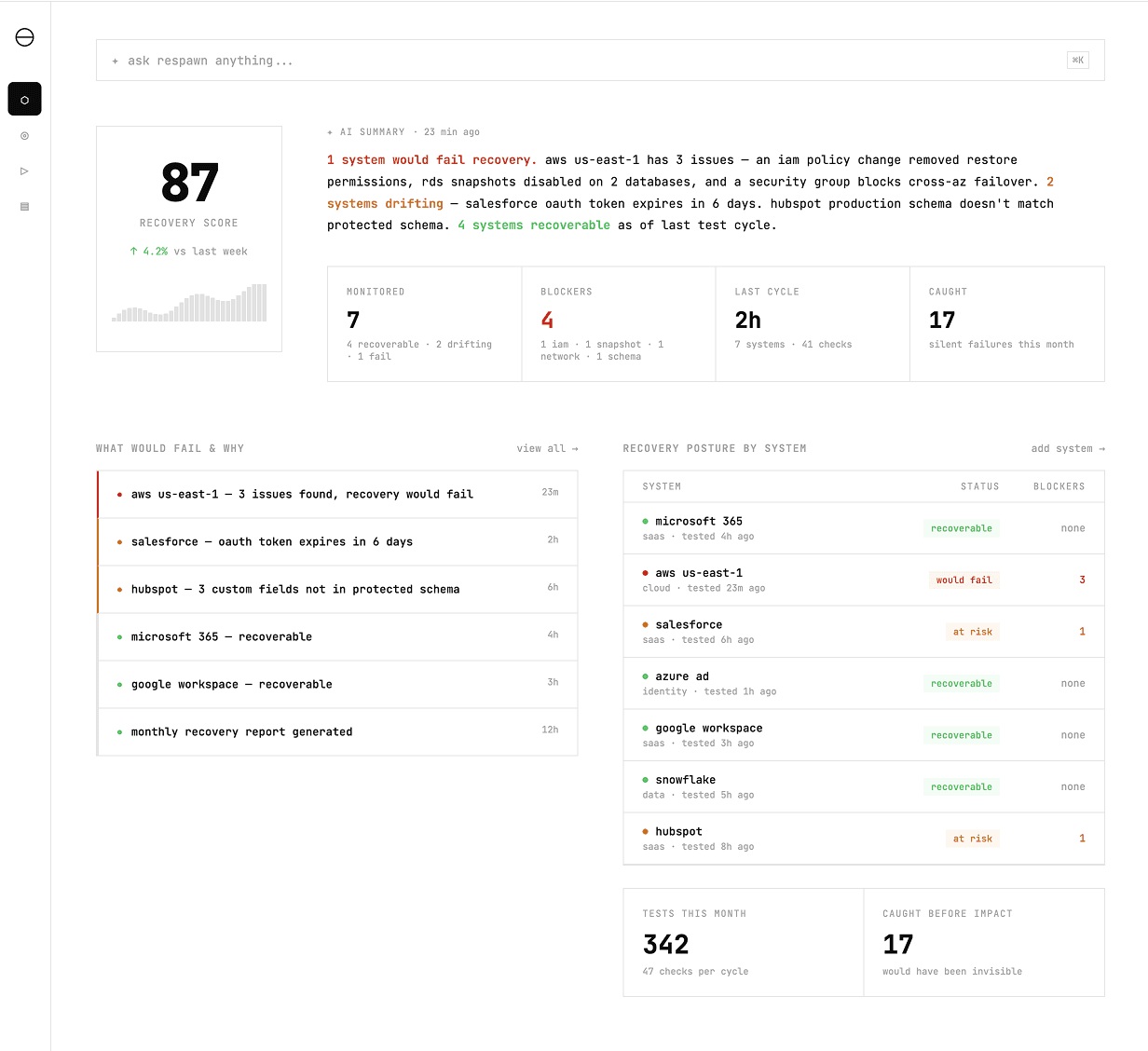
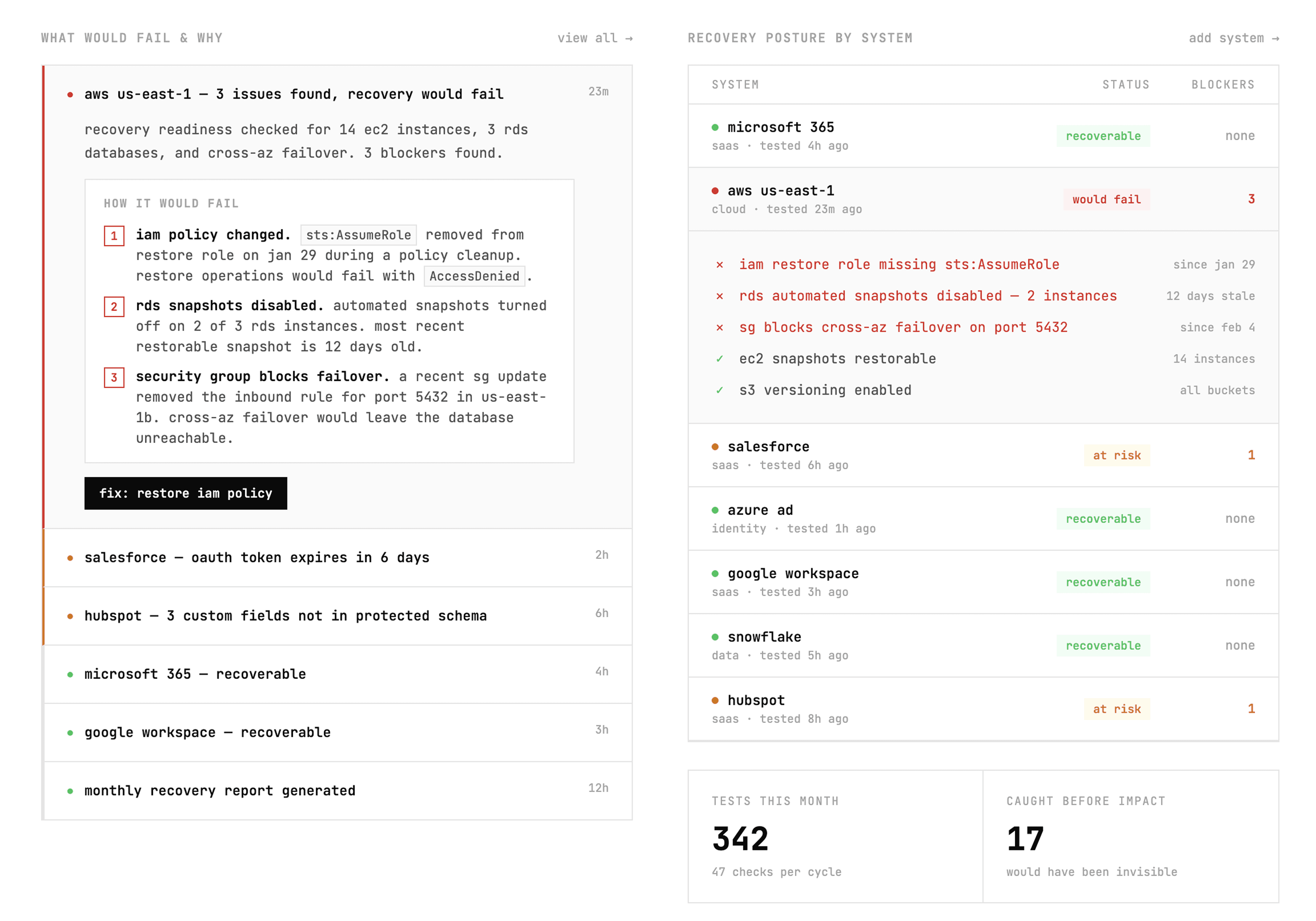
Respawn's ai-first platform looks for the stuff that quietly breaks recovery.
broken configs
scope mismatches
permission changes
token revocations
throttling and quota limits
shadow SaaS consuming bandwidth
identity issues
missing dependencies… and much more
Your AI teammate knows when and why you're drifting away from "recoverable."
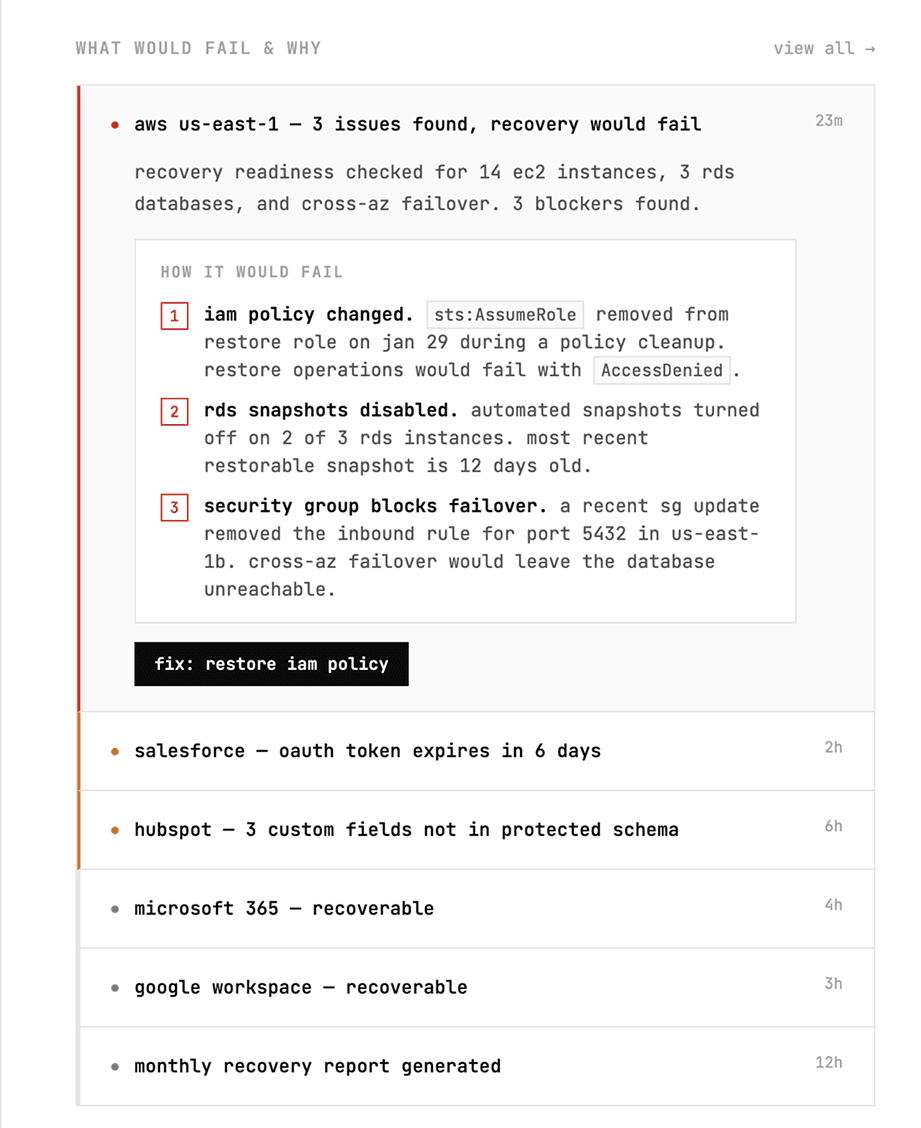
Suggests fixes you can actually do
No "check your settings."
Respawn gives you actions.
It tells you exactly what to do and why.
Takes action (with your approval)
Sometimes the fastest fix is… just doing it.
Respawn can:
recommend only
run one-click fixes
operate autonomously within policies you set
Ask anything. Seriously.
Respawn's ai copilot lives:
inside Respawn
in Microsoft Teams
in Slack
So the fix happens where the conversation already is. You can ask Respawn any cyber resilience related question at any time.
"Why are backups failing for this user?"
"What's the highest resilience risk right now?"
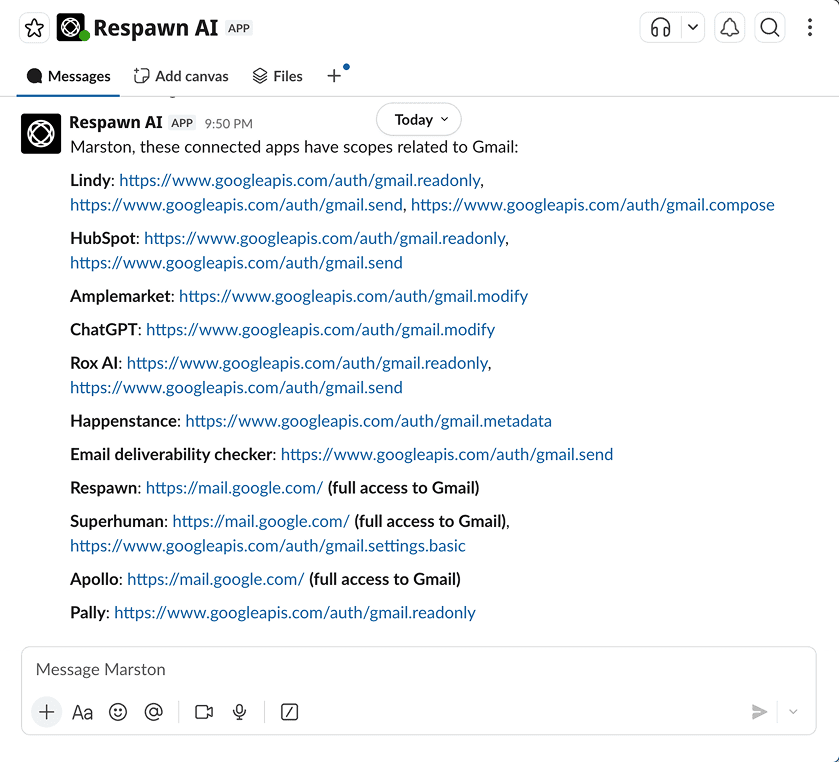
"Can you find me all the Shadow SaaS connected to gmail?"
"Generate me a report about our recovery posture"
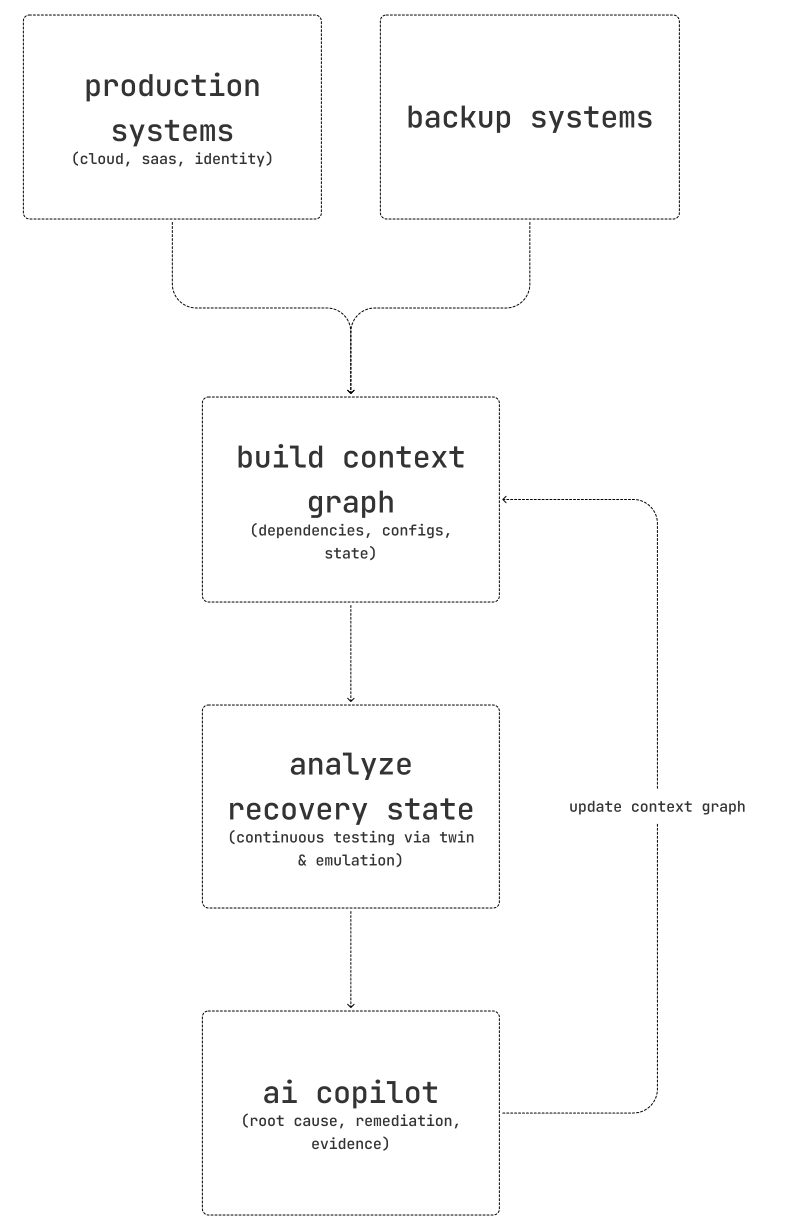
the control loop
prove
respawn continuously tests recoverability. output is binary and always current. recoverable or not.
trace
when the state flips, respawn's ai platform pinpoints the failure.
heal
respawn drives remediation where your team works. Slack or Teams. approvals. re-test on demand.
report
export evidence for customers, auditors, insurers, and the board. test history. change history. what broke. what was fixed. when recoverability returned.